Friday, 20 March 2015

In China, Infant Formula Makers Find a New Battleground – E-Commerce Websites


http://www.tmrblog.com/
The teeming infant formula market in China has found a promising battleground in e-commerce websites. The infant formula market in China has been facing headwinds in the form of health and safety concerns and the resultant regulatory pressure. These factors have brought about a wave of migration from conventional retailing channels to e-commerce websites, so as to keep up with the shifting purchasing patterns of new parents.

According to a recent research report, sales of online packaged foods in China have soared in the last three years, reaching US$7.26 billion in 2014 from US$2.83 billion in 2012. Within the packaged foods market in China, infant formula accounts for a sizeable portion. Corroborating this trend is Dunnhumby, a specialist in digital market insights, who says that the baby food segment takes precedence over all other types of products for new e-consumers. 

The e-commerce channel is being embraced rapidly by consumers because of the sheer convenience and variety it offers. These reasons also continue to draw in new consumers at a very promising rate.
Market research experts peg the total baby products market in China at about US$5.43 billion according to data collated from the 27 largest cities in the country. This data was collected between the August of 2013 and 2014.

Makers of infant formula in China were reeling under regulatory pressures after the Chinese government imposed massive antitrust fines on companies following lapses in quality. The negative publicity pushed prices down, putting infant formula companies in a predicament. 

E-commerce has now become a much sought after retailing channel for major companies in the baby food market, including Danone, Mead Johnson, and Nestle.


Tuesday, 17 March 2015

Global Medical Equipment Calibration Services Market Expected to Reach USD 2.1 Billion Globally in 2020

http://www.transparencymarketresearch.com/pressrelease/medical-equipment-calibration-services-market.htm
A New Market Report Published by the U.S. based market research company, Transparency Market Research “Global Medical Equipment Calibration Services Market - Industry Analysis, Size, Share & Forecast, 2014 - 2020” the global medical equipment calibration services market was valued at USD 1.1 billion in 2013 and is estimated to reach a market worth of USD 2.1 billion in 2020 growing at a CAGR of 10.1% from 2014 to 2020.

Calibration can be defined as, the comparative analysis of one equipment (under test) with another (pre-calibrated or standard) in order to determine the accuracy and precision of former with latter one. Rising number of multi-specialty hospitals and increasing complexity of the devices are the major factors that are expected to positively influence the medical equipment calibration services market. Furthermore, growing demand for new and refurbished medical devices that require periodic calibration and increasing quality oriented approach of the customers are some other key reasons cited to propel the growth of this market. In addition, increasing government and environmental regulations and frequent product recalls are some of the major drivers of this market. Frequent product recalls adversely affect the reputation of a company, and hence, the companies are offering strong focus on the calibration services before and after commercialization of their products.

Browse the full Global Medical Equipment Calibration Services Market: http://www.transparencymarketresearch.com/medical-equipment-calibration-services-market.html

Medical Equipment Calibration Services Market is divided into two segments, namely; by equipment types and by types of services. Amongst the equipment types, cardiovascular monitors calibration services market is expected to grow at a rapid rate, reporting a CAGR of 14.0% during forecast period 2014 – 2020. Similarly, by the end of 2020, imaging equipment calibration services market is identified as a largest segment. This is followed by vitals sign monitors and other patient monitoring equipment.

Furthermore, the market is also classified on the basis of types of services, such as, in-house calibration services, third party calibration services and OEM calibration services. As of 2013, in-house calibration services market was anticipated as the largest segment. However, by the end of 2020, the market for in-house calibration services is expected to grow at a constant rate due to increasing penetration of third party calibration service providers. Third party service providers are anticipated to emerge as the fastest growing segment during the forecast period owing to ease of access, quick calibration and sophisticated service with less cost. It has also been witnessed that certain service providers are offering 24x7 services with zero downtime for certain critical applications that is further attracting customers. On the other hand OEMs (original equipment manufacturers) are expected to witness decline in their market share. This trend is anticipated as the cost of the instrument to be calibrated is usually higher than third party calibration service provider. Additionally, most of the manufacturers currently are focused on their core competencies and downsizing their labor.

Geographically, in 2013, the European region was anticipated as the largest market in calibration services market globally. The leadership position of Europe is justified by the presence of large number of local and regional players, stringent government regulations for calibration of medical devices and extensive R&D practices. North America held the second largest position in the market and contributed to approximately 33.3% of the total calibration services market revenue in 2012. Asia-Pacific region is expected to witness tremendous increase in its market share and emerge as the fastest growing segment during the forecast period. Rising government regulations, increased awareness amongst patients towards quality of services in hospitals and laboratories and rising number of regional players are key reasons which would account for the growth of calibration services in this region.

The market is highly fragmented and is dominated by number of small and regional players. Fluke Biomedical, Tektronix, Inc., JPen Medical Systems, IN-CAL, and SQTC are some of the major players operating in this market. Companies in this market are adopting strategies of partnership and collaboration to increase their market presence.

The global medical equipment calibration services market is segmented as follows:

Global Medical Equipment Calibration Services Market, by Equipment Types
  • Cardiovascular Monitors
  • Fetal Monitors
  • Imaging Equipment
  • Vital Sign Monitoring
  • Infusion Pumps
  • Ventilators
  • Others

Global Medical Equipment Calibration Services Market, by Types of Services
  • In-House Calibration Services
  • Third Party Calibration Services
  • OEM Calibration Services

About Us

Transparency Market Research is a global market intelligence company, providing global business information reports and services. Our exclusive blend of quantitative forecasting and trends analysis provides forward-looking insight for thousands of decision makers. We are privileged with a highly experienced team of Analysts, Researchers, and Consultants, who use proprietary data sources and various tools and techniques to gather, and analyze information. Our data repository is continuously updated and revised by a team of research experts, so that it always reflects the latest trends and information. With a broad research and analysis capability, Transparency Market Research employs rigorous primary and secondary research techniques in developing distinctive data sets and research material for business reports.

Contact:
Mr. Nachiket
90 State Street, Suite 700
Albany, NY 12207
Tel: +1-518-618-1030
USA/Canada Toll Free: 866-552-3453
Email: sales@transparencymarketresearch.com
Web: http://www.transparencymarketresearch.com

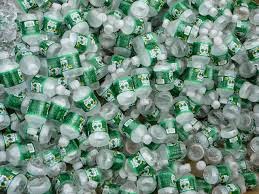
Global Bottled Water Market is Expected to Reach USD 279.65 billion in 2020: Transparency Market Research

http://www.transparencymarketresearch.com/pressrelease/bottled-water-market.htm
According to a new market report published by Transparency Market Research “Bottled Water Market - Global Industry Analysis, Size, Share, Growth, Trends and Forecast, 2014 - 2020” market was valued at USD 157.27 billion in 2013, which is expected to reach USD 279.65 billion by 2020, growing at a CAGR of 8.7% from 2014 to 2020. By volume, global bottled water market is expected to grow at a CAGR of 8.3% during the forecast period from 2014 to 2020 to reach a market size of 465.12 billion liters by 2020. In 2013, volume of the market was 267.91.billion liters.

Rising concern for health and wellness and evolution of new packaging initiatives are the major factors driving the growth of bottled water market. In addition, demand for bottled water has triggered with the increase in consumer choice availability for different flavored and vitamin rich functional water. Innovation in the field of portability of hygienic water is also filliping the growth of global bottled water market. Market restrains such as water contamination caused by leaching and lack of awareness regarding health hazards of low cost tap water have partially hindered the growth of global bottled water market. However, evolution of innovative and economical equipment designed for handling small bottling operations has increased the attractiveness of bottled water market among small bottlers.

By product type, bottled waters are classified as still water, carbonated water, flavored water and functional water. By revenue, still water is the largest contributor in the global bottled water market in 2013 and accounted for a market share of 64.9% respectively. Carbonated bottled water is the second largest contributor in the global bottled water market in 2013 and accounted for a market share of 22.9% respectively. Wide acceptance of non flavored and non carbonated drinking water is the key driving force behind the largest market share of still water segment. As of 2013, market share for flavored water and functional water were 7.1% and 5.1%. During the forecasted period from 2014 to 2020, high growth for flavored water segment will be triggered by product innovation regarding bottling of flavored drinking water. In addition, certain amount of consumer choice shift from unflavored to flavored drinking water will also drive the growth of flavored water segment.

Browse the full Bottled Water Market Report: http://www.transparencymarketresearch.com/bottled-water-market.html

The global bottled water market has been segmented into four broad regions: North America, Europe, Asia Pacific and RoW. By revenue, Asia Pacific is the global market leader in 2013; accounting for 33.0%. Moreover, during the forecasted period from 2014 to 2020, Asia Pacific is expected to remain the most promising market growing at an estimated CAGR of 10.5% in terms of revenue. The growth is attributed to high volume consumption, shifting trend in drinking habits towards more hygienic drinking options, rising disposable income and bulk water purchase among others. Europe is the second largest contributor in the global bottled water market in 2013 and accounted for a market share of 28.8%.

Some of the leading players in the market are Ajegroup SA (Peru), CG Roxane, LLC (U.S.), Coca-Cola Company (U.S.), Groupe Danone (France), Fonti Di Vinadio S.P.A. (Italy), HassiaWaters International GmbH & Co. KG (Germany), Icelandic Water Holdings ehf. (Iceland), Tibet 5100 Water Resources Holdings Ltd. (Hong Kong), Mountain Valley Spring Company, LLC (U.S.), Nestle Waters (France), PepsiCo, Inc. (U.S.), Suntory Beverage & Food Ltd (Japan), Unicer - Bebidas SA (Portugal), Grupo Vichy Catalan (Spain) and Hangzhou Wahaha Group Co., Ltd. (China) among others. The scope of the report includes competitive analysis of various market segments based on the product types and in-depth cross sectional analysis of the bottled water market across different geographic segments.

The market has been segmented as follows:

Bottled Water Market: Product Analysis
  • Still
  • Carbonated
  • Flavored
  • Functional

Bottled Water Market: Regional Analysis
  • North America
  • U.S.
  • Others
  • Europe
  • Germany
  • Others
  • Asia Pacific
  • China
  • India
  • Others
  • RoW
  • Brazil
  • Others

About Us

Transparency Market Research (TMR) is a global market intelligence company, providing global business information reports and services. Our exclusive blend of quantitative forecasting and trends analysis provides forward-looking insight for thousands of decision makers. TMR’s experienced team of Analysts, Researchers, and Consultants, use proprietary data sources and various tools and techniques to gather and analyze information.

Our data repository is continuously updated and revised by a team of research experts, so that it always reflects the latest trends and information. With a broad research and analysis capability, Transparency Market Research employs rigorous primary and secondary research techniques in developing distinctive data sets and research material for business reports.

Contact

Mr. Nachiket
90 State Street, Suite 700
Albany, NY 12207
Tel: +1-518-618-1030
USA - Canada Toll Free: 866-552-3453
Email: sales@transparencymarketresearch.com
Website: http://www.transparencymarketresearch.com/

University of British Columbia Researchers Find Technique to Store Energy Cost-Effectively

http://www.tmrblog.com/
A team of researchers at the University of British Columbia (UBC) has pioneered a new method to create materials that can store energy using an affordable lamp that can be easily procured from a hardware store. The researchers made the discovery in their quest to find a more efficient method of creating coatings that could be applied on a surface so as to conduct electricity. While many such coatings have already been developed, most of them have made use of materials and components that are very expensive (which also makes them impractical for daily use).
What’s different about this finding is that the technique can now enable the use of a consumer-grade heat-generating lamp to achieve the same results. The electricity-conducting solution is painted onto the surface of the lamp, and when it heats up, the catalytic coating has the desired effect.
There are a myriad of technologies that can benefit from the use of this technique – some of them are flexible electronic devices or hydrogen fuel converting cells. The study has been recently featured in Science Advances, an open access journal. If developed creatively, this method could open up new avenues in the clean energy arena.
This new finding could also hold significance considering that wind turbines and solar farms, though sustainable, do not provide uninterrupted energy generation as they depend on weather conditions.
When considered against this drawback, the team at the UBC says that when energy is stored during low-demand periods, a large reserve can be created for use during peak hours by storing the energy via hydrogen fuels. This process can be made much more affordable now with the new findings.
The new solution is not just scalable, but is also amenable to mass production, which is what the team aims to work on.

Material Inspired by Fish Scales Could be Next Breakthrough in Spacesuit and Bullet-Proof Clothing Manufacturing

http://www.tmrblog.com/
A recent discovery credited to the Israel Institute of Technology (IIT) indicates that fish scales are strong enough to protect us from bullets, and possibly even space debris. The discovery, made at Technion, an establishment under the IIT, makes use of 3D printing to form an exceptionally tough material composed of two layers. Stephan Rudykh, an assistant professor at the institute, has created the layer, which, besides being impervious, is also soft enough to be converted into a space suit or bullet-proof clothing.

This material is unique in that it boasts both imperviousness and durability – something that similar previous materials do not possess. The professor states that he was inspired by fish, whose scaly skins carry the same attributes. He said that typically, as flexibility increases, the strength of a material reduces and vice versa. This however, is an exception when it comes to fish, which are protected by a layer of hard scales that protect a layer of soft tissue. 

According to Rudykh, the material can withstand penetration, making it, in theory, an ideal choice for creating bullet-proof clothing and spacesuits (for protection against micro-meteorites). This new material, says its creator, features a 40-factor higher resistance to penetration, whereas the loss of flexibility dropped by a mere factor of five.

Currently, even as 3D printing has disrupted the wearable innovations space, this new material could be used in combination with advanced technologies for some exciting breakthroughs. 

The creator of this material explains that the encouraging results were achieved by essentially experimenting with geometry of soft and rigid materials. The next step in the development of this material will be testing the durability of the material when exposed to high-speed particles and projectiles.

New Chemical ‘Printing’ Machine Could Drastically Speed Up Synthesis of an Array of Chemicals

http://www.tmrblog.com/
The process of chemical research is a lengthy one, especially where the creation of complex molecules is involved. This not only means that researchers often have to wait and endure what can be an extremely painstaking process. It is this very problem that a chemist from the University of Illinois aims to address. Martin Burke has created a machine that can automate the chemical research process and speed it up by a significant degree. The machine achieves this by allowing chemists to simply ‘print’ custom-formulated chemicals.

The specifics of this chemical printing machine have been discussed in detail in the Journal of Science published a few days ago. The study reveals that the specifications of the machine have been designed to allow the synthesis of hundreds of different molecules using a variety of starter materials. As further developments in this arena take place, it would soon become possible for chemists and scientists to synthesize chemicals that are similar to the ones found in nature. The next breakthrough that could potentially be achieved with this process is the creation of useful products such as antifungal or antibiotic medicines without extracting the same from nature, but by synthesizing the same artificially by using industrial chemicals that are also safe.

Burke says that nature carries several molecules that have some extraordinary properties which prove useful in a variety of applications. The problem scientists face is that these molecules are exceptionally hard to formulate and need to be custom-built.

But with the process so close to being fully automated, it will not be long before scientists are able to rapidly create molecules that are radically different. The machine does this by identifying the right building blocks for the molecule and then connecting them in the desired pattern. Once it has completed building a foundational block, the machine proceeds to purify it, which effectively means that the machine can begin with basic regents, going on to produce extremely complex chemical formulations across 14 distinct small molecule classes. This covers an array ranging from molecules used in solar cells to ones used in pharmaceuticals.

Friday, 13 March 2015

Micronutrients Market is Expected to Reach USD 7.59 Billion in 2020: Transparency Market Research

Transparency Market Research has published a new report titled “Micronutrients Market Global Industry Analysis, Size, Share, Growth, Trends and Forecast, 20142020” According to the report, global market for micronutrients was valued at USD 4.37 billion in 2013 and is anticipated to reach USD 7.59 billion in 2020, expanding at a CAGR of 8.2% between 2014 and 2020.

The market for micronutrients is driven by high demand for quality and uniform yield owing to increasing population and depleting arable land. Furthermore, the global micronutrients market is driven by deficiency of micronutrients in soil across various regions. This affects the yield and growth of plants. One of the major challenges in the agricultural industry is to meet demand for food globally. Micronutrients offer the highest potential for improvement in quality and uniformity in the yield of crops. Depleting arable land is likely to provide opportunities for hydroponically produced food and seed treatment applications. However, higher prices of micronutrients and lack of awareness regarding applications, technological know-how and dosage of micronutrients is expected to hamper growth of the micronutrients market. Some government and development organizations are taking initiatives to create awareness among growers and farmers.

Zinc was the most widely used micronutrient across various regions. It accounted for over one third of the total volume demand in 2013. However, molybdenum, which is required in a small quantity in crops and plants, is estimated to be the fastest growing product segment in the micronutrients market in the next few years. Soil is the most applied technique for micronutrients. Foliar applications constituted the second-largest share of 23.4% in the micronutrients market in 2013. However, other applications such as seed treatment and hydroponics are projected to provide better opportunities for the global micronutrients market in the near future.

Cereals accounted for the highest demand among crop types for micronutrients in 2013. Cereals such as wheat, rice, maize, barley and oats constitute majority of food sources in various regions. Fruits and vegetables are anticipated to be the fastest growing crop types for micronutrients during the forecast period. Other types of crops such as flowers are also likely to provide opportunity for the micronutrients market in the next few years. Pulses and oilseeds accounted for the second-largest demand of 29.6% for micronutrients in 2013 

Asia Pacific dominated the micronutrients market in 2013 and accounted for over 50% of the market share in 2013. The region is estimated to exhibit potential growth for the micronutrients market during the forecast period. Asia Pacific was followed by North America, which is projected to be the fastest growing region in the micronutrients market during the forecast period. Demand for micronutrients is increasing in North America due to depleting arable land and higher demand for quality and uniform yield. Europe held the third-largest demand for micronutrients in 2013. Rest of the World is anticipated to witness stable demand for micronutrients between 2014 and 2020.

The report provides a comprehensive view of the micronutrients market in terms of volume and revenue. Additionally, the report includes current demand analysis and forecast for product segments, applications, crop types and form types in North America, Europe, Asia Pacific and Rest of the World.

Browse the full Micronutrients Market: http://www.transparencymarketresearch.com/micronutrients-market.html

The report comprises the following segments:

Micronutrients Market Product Segment Analysis
  • Boron
  • Copper
  • Iron
  • Manganese
  • Molybdenum
  • Zinc
  • Others (Including chlorine, nickel, etc.)

Micronutrients Market Application Analysis
  • Fertigation
  • Foliar
  • Soil
  • Seed treatment
  • Others (Including hydroponics, etc.)
Micronutrients Market Crop Type Analysis
  • Cereals
  • Pulses and oilseeds
  • Fruits and vegetables
  • Others (Including floriculture, etc.)

Micronutrients Market Form Type Analysis
  • Non-chelated
  • Chelated

Micronutrients Market Regional Analysis
  • North America
  • Europe
  • Asia Pacific
  • Rest of the World

About UsTransparency Market Research (TMR) is a global market intelligence company providing business information reports and services. The company’s exclusive blend of quantitative forecasting and trend analysis provides forward-looking insight for thousands of decision makers. TMR’s experienced team of analysts, researchers, and consultants use proprietary data sources and various tools and techniques to gather and analyze information.

ContactMs. Sheela AK
State Tower,
90 State Street,
Suite 700,
Albany NY12207
United States
USACanada Toll Free: 866-552-3453
Email: sales@transparencymarketresearch.com
Website: http://www.transparencymarketresearch.com/